AI call monitoring products can look alike in a demo: transcripts, scores, dashboards. The differences that matter to a regulated firm — whether results can be checked, what isn't covered, who decides, how data is protected — only show up when you ask. These are the questions worth asking, and what a good answer sounds like.
Evidence and accuracy
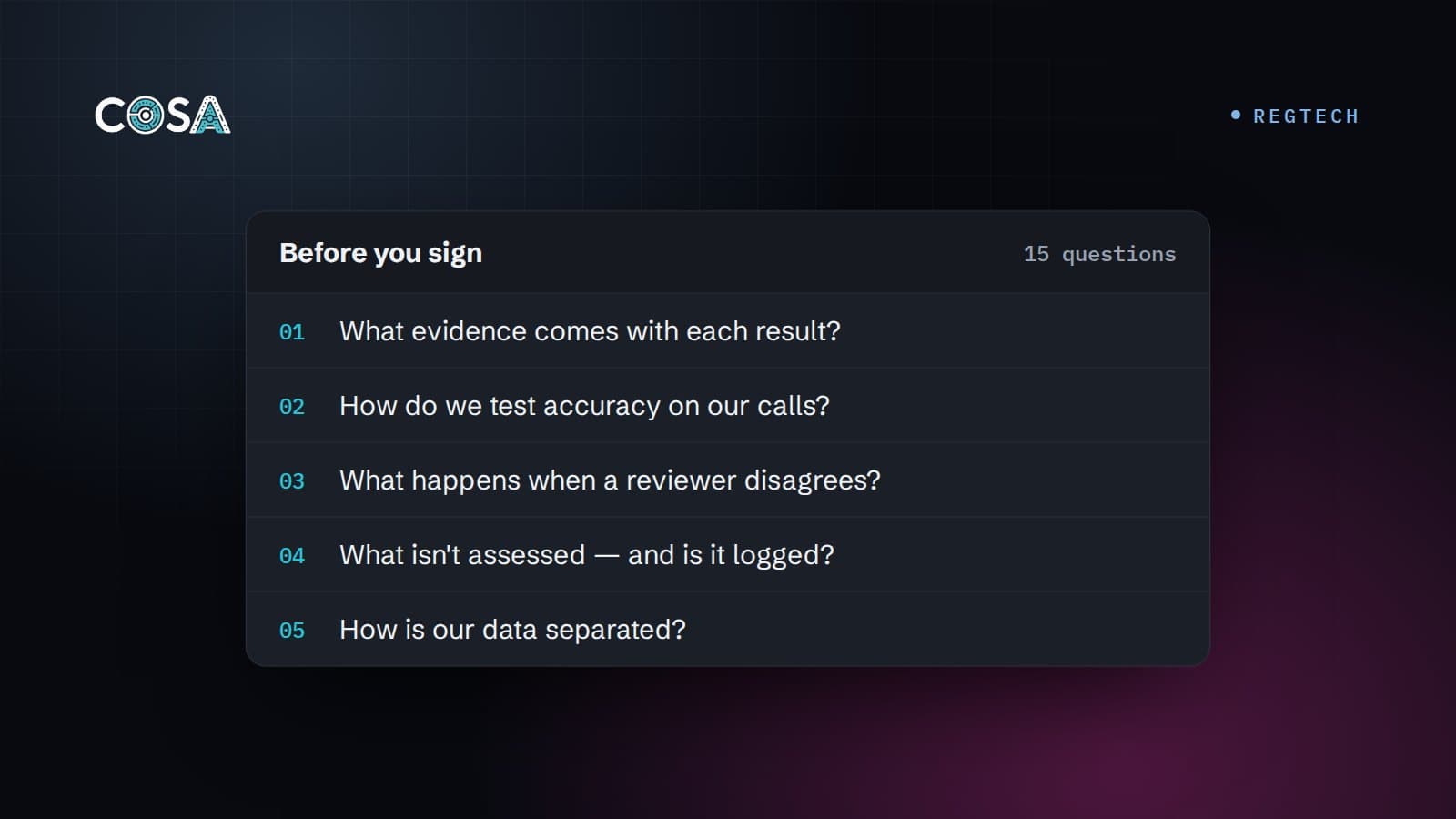
1. What evidence comes with each result?
A good answer: every verdict shows the quoted words, a plain-English explanation and a confidence level, so a reviewer can check it in seconds.
2. How do we test accuracy on our own calls?
A good answer: a calibration period on a sample of your past calls, compared with your experienced reviewers, with rules refined where you disagree. Be wary of a single accuracy percentage measured on someone else's calls.
3. What happens when a reviewer disagrees?
A good answer: authorised reviewers can override a result, the original verdict is kept, and automatic re-runs can't quietly replace their decision.
4. Does it work after the call, or during it?
A good answer: for compliance QA, assessing the finished call means the whole conversation is considered in context, and advisers aren't distracted while they're with a client.
Coverage and rules
5. Whose rules are calls checked against?
A good answer: yours, written in plain English by your compliance team, with a choice of how each is judged and which call types it applies to — not a fixed generic template.
6. What isn't assessed, and is it logged?
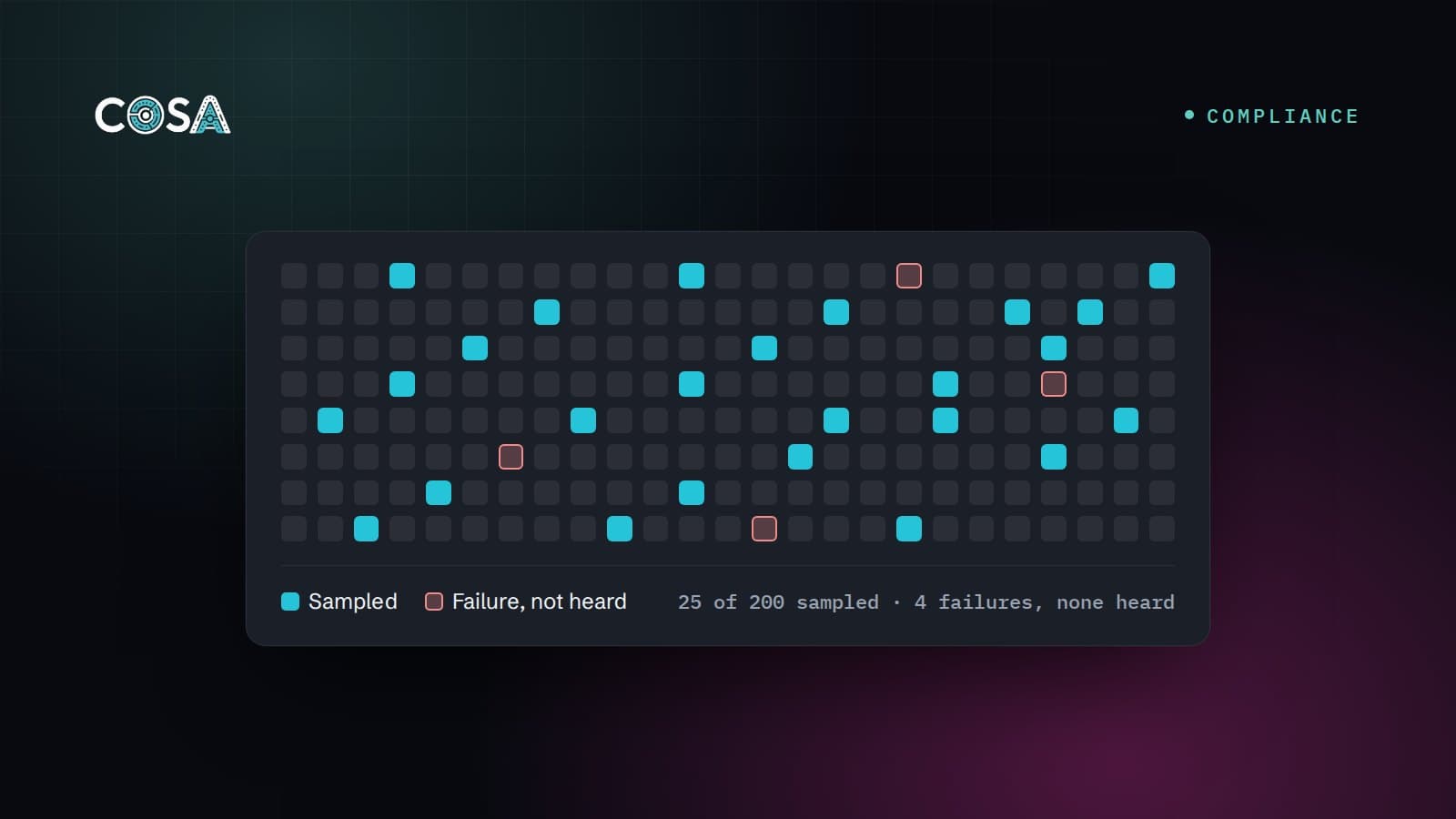
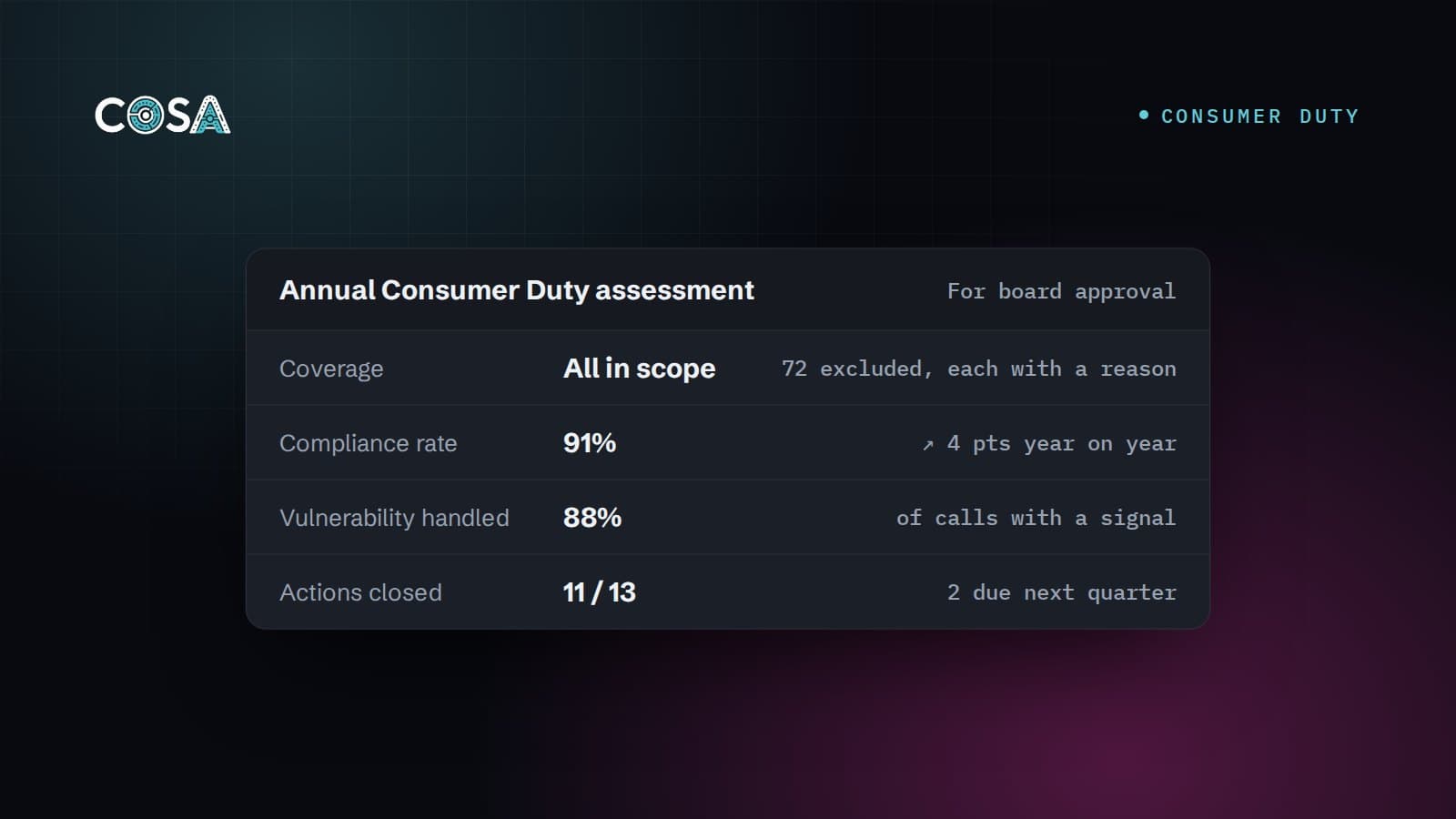
A good answer: a call-selection policy you control (call types, lengths, answered calls), with every excluded call logged and a reason — so you can prove what your monitoring covered.
7. How is vulnerability handled?
A good answer: signals across health, life events, resilience and capability are judged in context, including whether the adviser adapted — not a keyword list.
People and process
8. What does the compliance team's day look like?
A good answer: a prioritised list of what needs attention, evidence one click away, alerts for failures you care about, and MI that doesn't need assembling by hand.
9. What do advisers get?
A good answer: nothing changes in how they make calls, and they get something back — summaries and next steps, and coaching grounded in real conversations.
Security and data
10. How is our data separated from other customers'?
A good answer: isolation enforced in the database itself, not just in the application.
11. Who can access what?
A good answer: invitation-only accounts, role-based permissions and two-factor authentication.
12. Is activity auditable?
A good answer: logins, uploads, exports and overrides are logged against a named user and a time.
13. What about retention, sub-processors and a DPIA?
A good answer: clear, written answers you can take to your DPO — and a supplier that is happy to support your data protection impact assessment and supplier due diligence.
Commercials and rollout
14. How long to go live, and what do you need from us?
A good answer: a plan measured in weeks, with a named person on each side: connect the call source, agree scope, write and calibrate rules, go live.
15. How is it priced, and what's the return?
A good answer: pricing that scales with call volume and features, and a return you can model from reviewer time saved and coverage gained. Try the ROI calculator with your own numbers.
Running a fair comparison
Give each shortlisted supplier the same set of past calls, the same rules and the same questions. Ask your reviewers to judge the results from the evidence alone. The product that makes the right calls easy to check is usually the one that will survive contact with a file review.
You can put COSA through exactly that test — book a demo on calls like yours, and review our security and trust details in advance.
This article is general information, not legal or regulatory advice.