Most vulnerable customers never say the word. Vulnerability surfaces in passing — a bereavement mentioned halfway through a fact find, a hesitation over numbers, a relative answering on someone's behalf. Whether it gets noticed depends on whether anyone was listening at that moment.
What FG21/1 means by a vulnerable customer
The FCA's guidance for firms on the fair treatment of vulnerable customers (FG21/1) defines a vulnerable customer as someone who, due to their personal circumstances, is especially susceptible to harm, particularly when a firm is not acting with appropriate levels of care.
Two points in that definition matter for advice firms. First, vulnerability is about circumstances, not a type of person — anyone can become vulnerable, and it can be temporary, sporadic or permanent. Second, the harm depends on the firm: the same customer can get a good outcome from an adviser who notices and adapts, and a poor one from an adviser who doesn't. The FCA's own research has consistently found that around half of UK adults show one or more characteristics of vulnerability, so this is not an edge case.
The four drivers — and how they sound on a call
| Driver | Examples in FG21/1 | How it can surface | What good handling sounds like |
|---|---|---|---|
| Health | Physical disability; severe or long-term illness; hearing or visual impairment; mental health conditions; addiction; low mental capacity or cognitive disability. | "I get muddled with numbers since my stroke." Repeated requests to go back over a point. Tiredness late in a long call. | Slowing down, breaking information into smaller pieces, offering a written summary or a second call, checking understanding. |
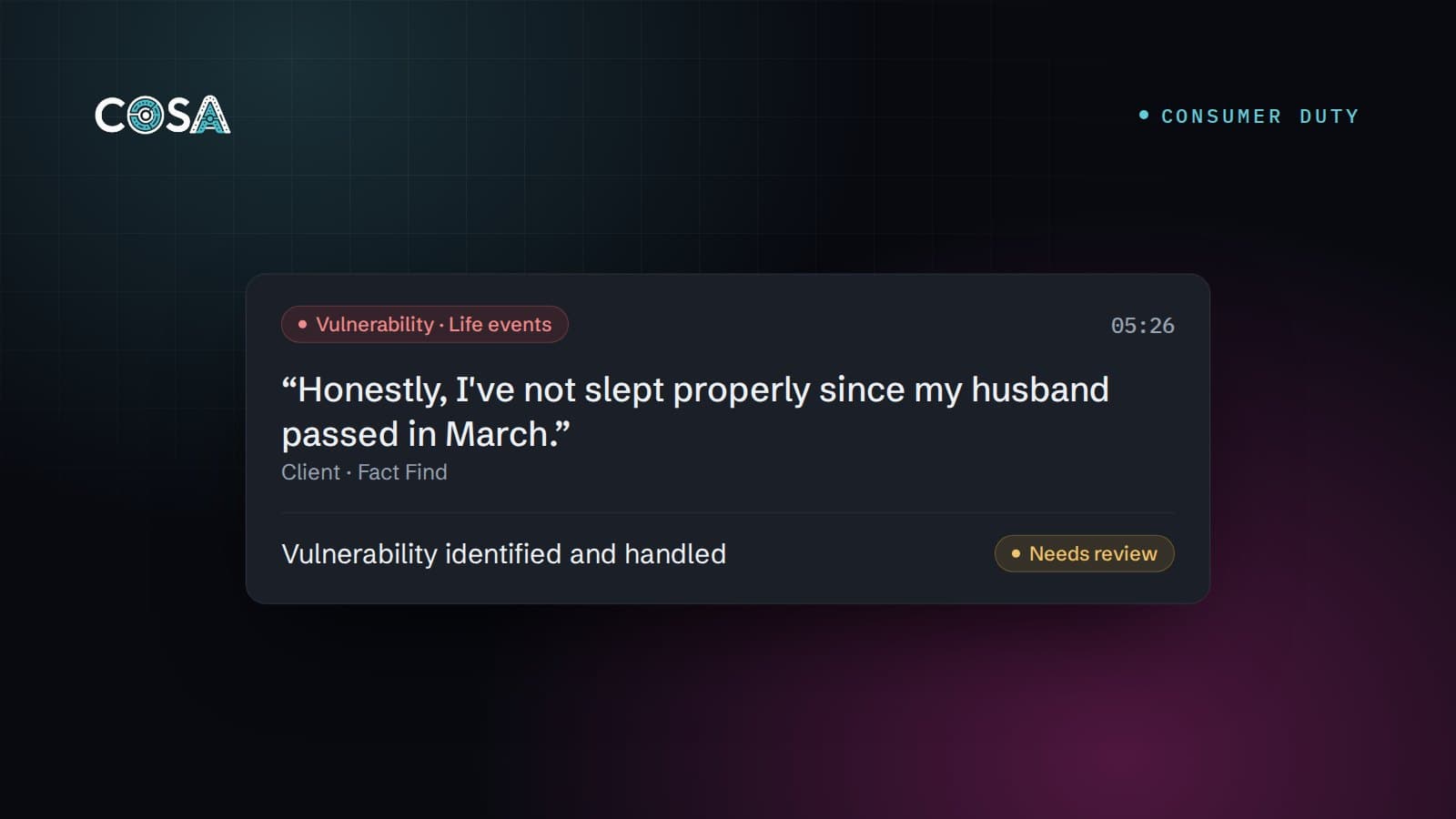
| Life events | Bereavement; relationship breakdown; retirement; income shock; caring responsibilities; domestic abuse, including economic control. | "I've not slept properly since my husband passed in March." A decision being made in a hurry after a change in circumstances. | Acknowledging it, checking the customer is comfortable to continue, and not letting the timetable be driven by the event. |
| Resilience | Inadequate or erratic income; over-indebtedness; low savings; low emotional resilience. | "We're behind on a couple of bills." Anxiety about a payment date. No savings buffer. | Exploring affordability properly, signposting free debt help such as MoneyHelper where relevant, and taking pressure off the decision. |
| Capability | Low knowledge or confidence in managing finances; poor literacy or numeracy; poor English language skills; poor digital skills; learning difficulties; no or low access to help or support. | A son answering questions on his mother's behalf. "I don't really understand these things — you decide." | Plain language, confirming who is making the decision (and on what authority), and checking understanding in the customer's own words. |
Why keyword spotting isn't enough
It is tempting to search transcripts for words like "died", "hospital" or "debt". In practice, keyword lists fail in both directions:
- They miss real signals. Vulnerability is often expressed indirectly — "it's been a hard year", "my daughter usually deals with this" — or shows up as behaviour, such as repeatedly asking for figures to be explained again.
- They flag harmless ones. Answers to a lender's health and lifestyle questions, asked to qualify for enhanced terms, are part of the process and aren't a sign of vulnerability on their own. "My father passed the business to me" is not a bereavement.
- They say nothing about the response. The most important question is not whether a signal appeared, but whether the adviser noticed and adapted.
That is why effective monitoring reads the whole conversation: the signal in context, and what happened next.
What good evidence looks like
For each vulnerability signal, a defensible record answers three questions:
- What was said? The customer's words, quoted, with where they came in the call.
- How did the adviser respond? Did they acknowledge it, adjust the pace, check the customer was comfortable to continue, offer to involve someone they trust, or follow up in writing?
- What happened next? The support or adjustment put in place, and the outcome.
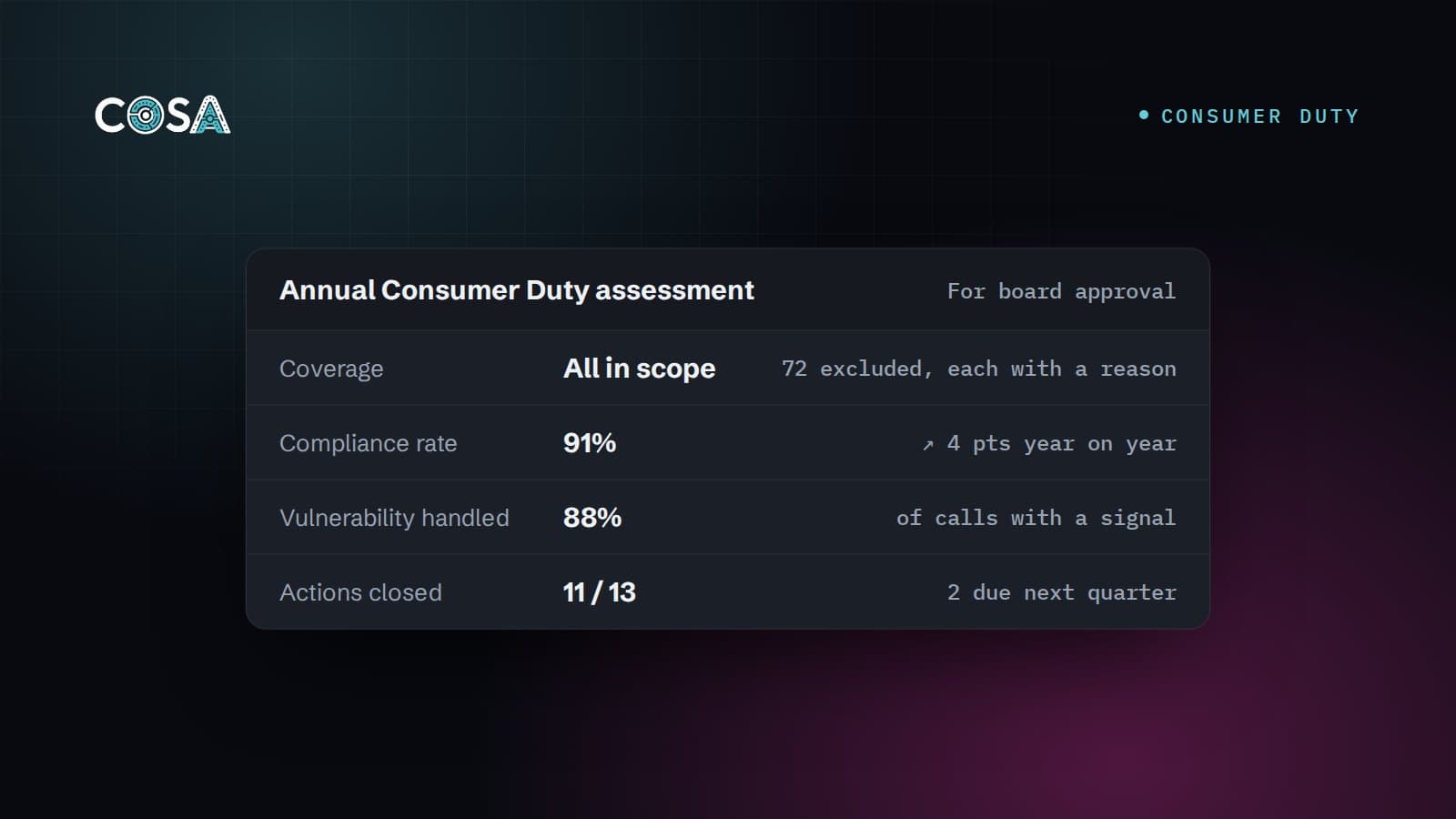
Aggregated, those records become the MI the Consumer Duty expects: how often signs of vulnerability appear, how consistently they are handled, and whether outcomes for those customers match everyone else's. Our guide to compliance MI for boards covers how to present it.
Where AI helps — and where people must decide
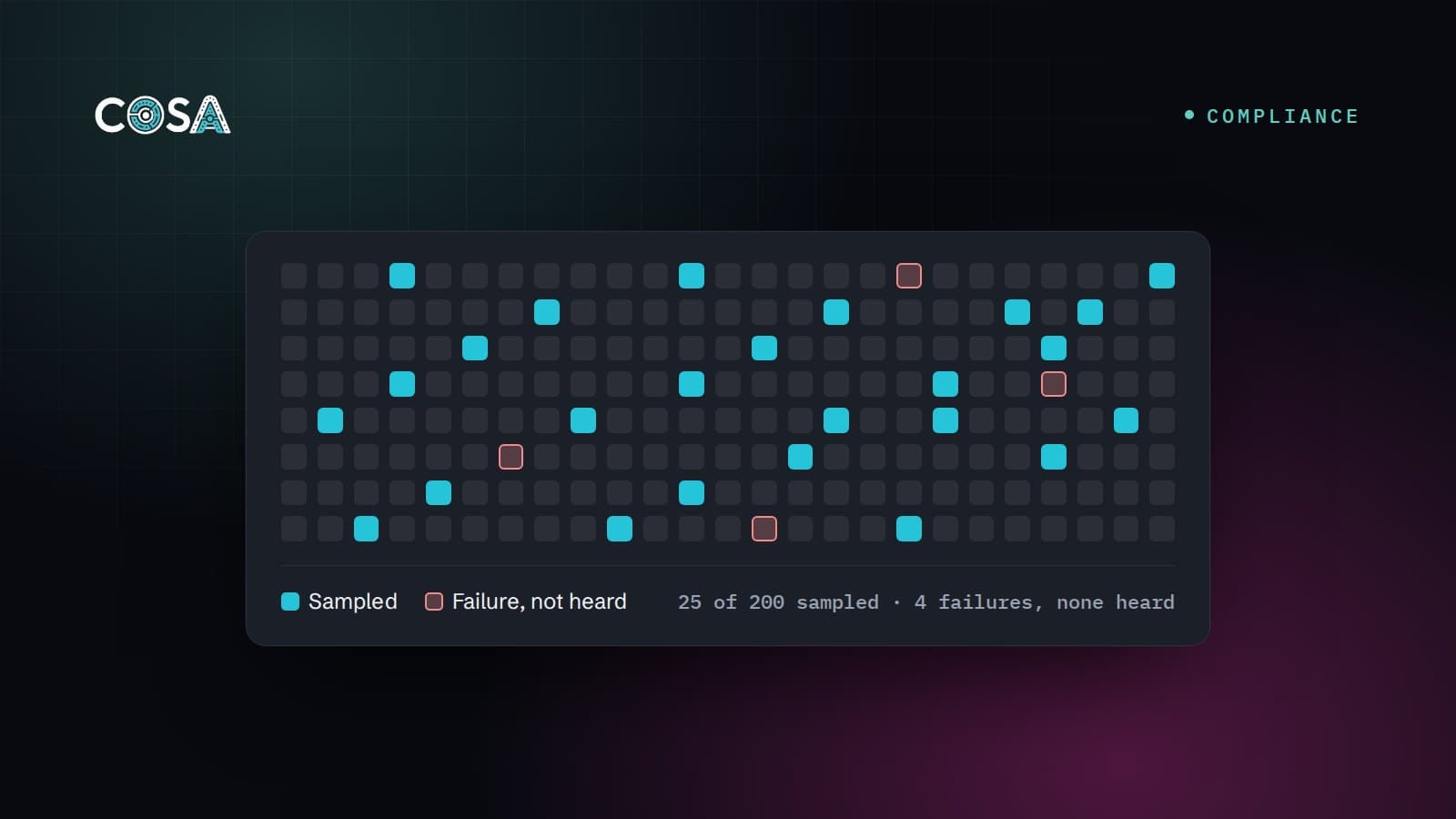
AI changes the economics of listening. Instead of hoping a sample happens to include the call where a bereavement was mentioned, every in-scope call can be read for signals across all four drivers, with the quote attached and an assessment of whether the adviser responded appropriately. Flags go to a person for review.
What AI shouldn't do is decide what support a customer needs. That judgement — and the conversation that follows — belongs to your people. A good system makes it easy for them: the evidence in one place, the ability to agree or override, and a record of the decision.
A practical workflow
- Make vulnerability a rule on every call type, not just fact finds. Signals appear on follow-ups and short calls too.
- Assess every in-scope call so nothing depends on sampling.
- Review flags quickly — ideally within a day — while there's still time to follow up.
- Record the adjustment: a slower second call, a written summary, a family member involved with the customer's agreement.
- Report trends: signals per hundred calls by driver, handling rates, and outcomes compared with other customers.
- Coach with real examples: the quoted moment and what good would have sounded like.
COSA listens for all four drivers on every call and assesses whether the adviser adapted — see how it supports the Consumer Duty, or ask the COSA Assistant "Were there any signs of vulnerability?" and hear the moment it came from.
This article is general information, not legal or regulatory advice.