"What was she told about early repayment charges?" In a complaint, a file review or a handover, questions like that used to mean listening back through hours of calls. An AI assistant can answer in seconds. But in a regulated firm, a fast answer is only worth having if you can check it — which is why citations, and being able to hear the moment itself, matter more than the answer.
The problem: what was actually said?
Most of what matters about a client relationship is in conversations: what the client wanted, what they were told, what they agreed to, what worried them. When someone needs to know — a compliance reviewer, an adviser picking up a colleague's client, a manager answering a complaint — the options have been to rely on notes, search transcripts for keywords, or listen again.
Notes are selective, keyword search misses anything phrased differently, and listening takes as long as the calls did.
How a grounded assistant answers
- Scope. The question is asked about one client, so only that client's records are in play.
- Retrieve. The system searches the client's transcribed calls for the most relevant passages — by meaning as well as by keyword, so a question about "roll-up" also finds "the interest is added on".
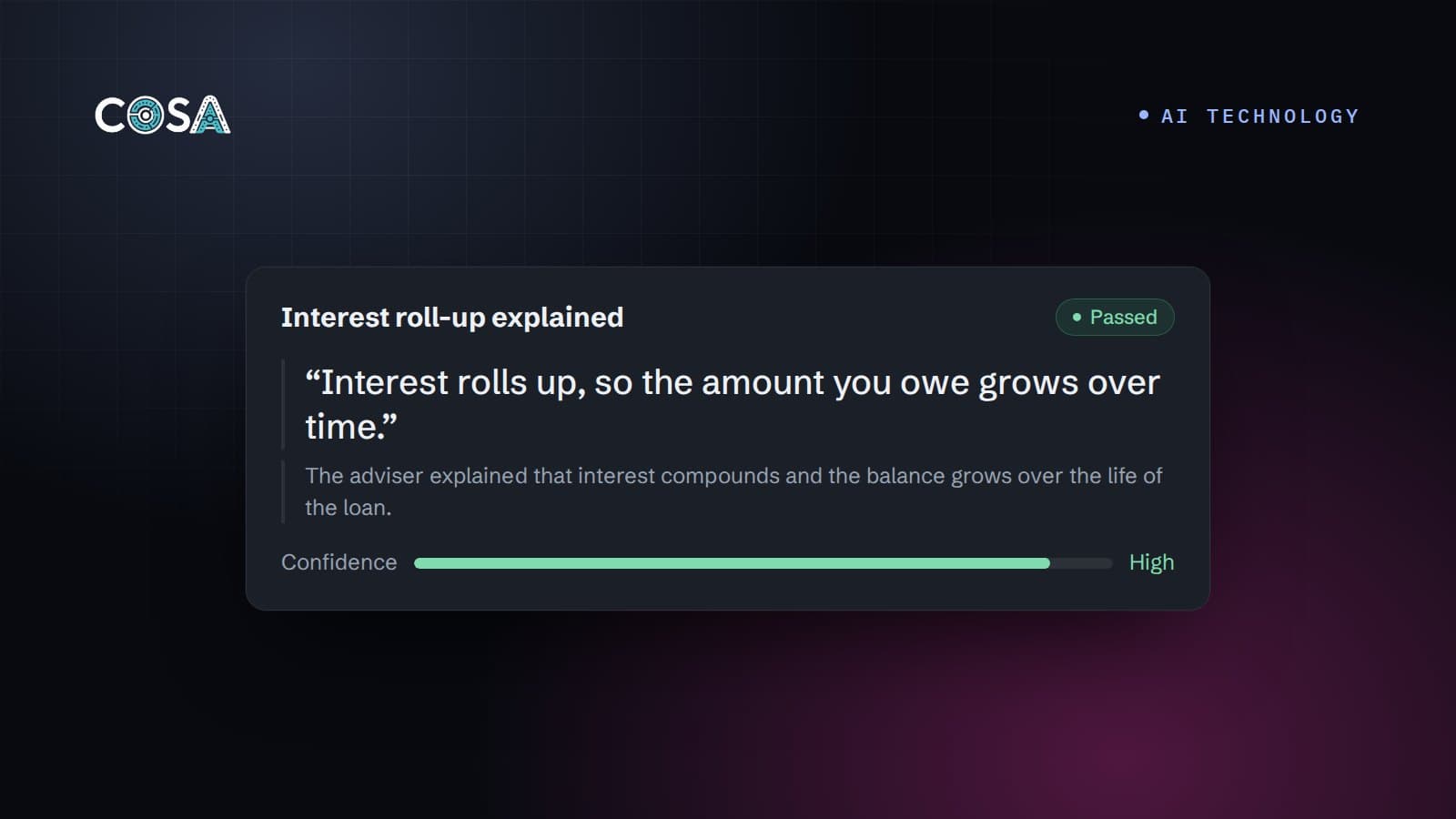
- Answer from the passages. The answer is written from what was retrieved, and each claim is tied to the passage it came from.
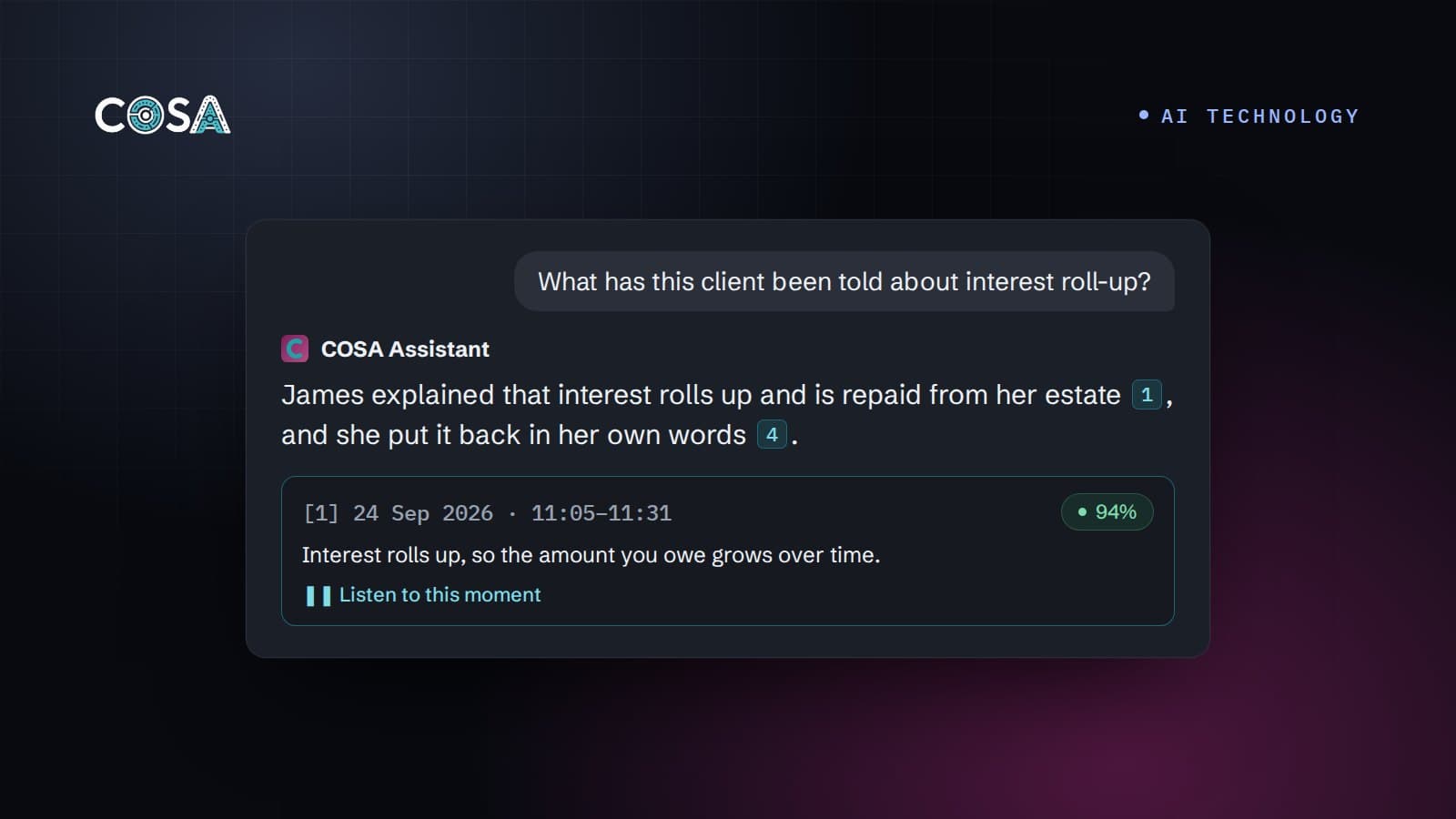
- Cite. Numbered citations link to the passage, the call it came from, its time range and a match score.
- Listen. One click plays the recording from the start of the cited passage and stops at its end.
Why citations matter in regulated work
Under SM&CR and the Consumer Duty, people remain accountable for decisions made with the help of AI. A citation turns an AI answer from something you have to trust into something you can verify: open it, read the passage, and decide whether it supports the claim. It also leaves a trail — which passages an answer relied on — that makes the reasoning reviewable later.
What listening adds
Transcripts are good but not perfect. They can mishear names and numbers — "fifteen" and "fifty" — and they strip out everything that isn't words: hesitation, confusion, pressure, reassurance. For anything that matters, hearing the moment is the fastest way to be sure. That's why the COSA Assistant's sources each have a "Listen to this moment" button, which plays the call recording from the start of the passage in a player that keeps going while you work.
Where teams use it
- Complaints — "What did we say about early repayment charges, and when?"
- File reviews — "Did the adviser recommend independent legal advice?"
- Handovers — "What am I waiting on from this client?"
- QA follow-ups — "Were there any signs of vulnerability, and how were they handled?"
- Before a call — "What has changed since the first call?"
The limits — and how to work with them
- Retrieval can miss. If a passage isn't retrieved, it can't be used. Good systems search several ways and show every passage they drew on, not just the ones they cited.
- Answers can still be wrong. Grounding and citations reduce the risk; they don't remove it. Check before you rely on an answer.
- It should say what it doesn't know. When the calls don't cover something, the right answer is "that isn't in the calls", not a plausible guess.
- It isn't a decision. An assistant helps people find and check what was said. Compliance decisions stay with people.
Questions to ask before you use one
- Is every conversation scoped to a single client?
- Does every claim cite a passage, with where it came from?
- Can you hear the cited moment in the recording?
- Does it respect your permissions — can someone who only sees certain advisers' calls get answers from other calls?
- Are sources saved with the answer, so reopening a conversation later still shows them?
- Can a conversation be exported for the file?
The COSA Assistant was built to answer yes to each of these. Try the interactive demo — pick a question, open the sources, and listen to the moment an answer came from.
This article is general information, not legal or regulatory advice.