Complaints root cause analysis is working out why complaints happen, not just resolving each one: what went wrong, whether the same cause affects other customers, and what will stop it recurring. Under DISP 1.3, firms must take reasonable steps to identify and remedy recurring or systemic problems; the Consumer Duty requires processes to identify the root causes of any failure to deliver the outcomes firms must monitor.
What is complaints root cause analysis?
Handling a complaint answers the customer's question: what happened, and what will the firm do about it? Root cause analysis answers the firm's question: why did it happen, and who else might it have happened to? A firm can resolve every complaint fairly and still receive the same complaint next quarter if it never asks the second question.
The distinction that matters is between the symptom, the immediate cause and the root cause. The example below is illustrative.
| Level | Illustrative example | The question it answers |
|---|---|---|
| Symptom | "Nobody told me there could be a charge if I paid it back early." | What is the customer unhappy about? |
| Immediate cause | On the follow-up call, the adviser covered voluntary repayments but not early repayment charges. | What went wrong in this case? |
| Root cause | A script revision moved the early repayment charge explanation into a section advisers often skip when a call runs long. | Why did it go wrong, and could it happen again? |
A root cause is usually something the firm controls: a script, a process step, training, product information, supervision, or how signs of vulnerability are picked up. "The adviser forgot" is rarely the end of the analysis: ask why the process made forgetting easy, and whether other advisers forget too.
What does the FCA expect? DISP and the Consumer Duty
The complaints rules in DISP 1.3
Complaint handling sits in DISP 1, "Treating complainants fairly", in the Dispute Resolution: Complaints sourcebook of the FCA Handbook. Under DISP 1.3.3R, a firm must put in place appropriate management controls and take reasonable steps to ensure that, in handling complaints, it identifies and remedies any recurring or systemic problems. The rule gives examples: "analysing the causes of individual complaints so as to identify root causes common to types of complaint"; considering whether those root causes may also affect other processes or products, including ones not directly complained about; and "correcting, where reasonable to do so, such root causes".
DISP 1.3.6G adds that where a firm identifies recurring or systemic problems, it should consider whether it ought to act for customers who may have suffered detriment but have not complained and, if so, take appropriate and proportionate measures to ensure they are given appropriate redress. FG26/2, the FCA's finalised guidance on firm-led redress exercises (March 2026), is intended to help firms comply with both provisions and, where it applies, the Consumer Duty.
The Consumer Duty: PRIN 2A.9
The Consumer Duty makes root cause analysis an explicit rule. Under PRIN 2A.9, a firm must regularly monitor the outcomes retail customers receive from the products it manufactures or distributes, its communications with them and the customer support it provides (PRIN 2A.9.8R). That monitoring must let it determine, at least, whether customers are sold products designed to meet their needs, characteristics and objectives, whether products provide fair value, whether customers are equipped with the right information to make effective, timely and properly informed decisions, and whether they receive the support they need (PRIN 2A.9.9R).
PRIN 2A.9.11R then says: "A firm must have in place processes to identify the root causes of any failure to deliver the outcomes listed in PRIN 2A.9.9R." PRIN 2A.9.12R requires the firm to take appropriate action where customers are not receiving those outcomes or are at risk of not receiving them, including where one group of customers gets worse outcomes than others from the same product. (More on the PRIN 2A framework in our guide to Consumer Duty outcomes monitoring.)
A complaint is evidence that one customer may not have received a good outcome; the Duty asks whether its cause affects others, and what the firm did about it. The FCA has also said that where monitoring shows a group of customers, such as customers in vulnerable circumstances, getting worse outcomes than others, it expects firms to investigate the root cause and take appropriate action where necessary.
When a root cause points to redress
FG26/2 gives good and poor practice examples for firms that have identified a systemic or recurring issue, or failed to prevent foreseeable harm, and decide to offer redress proactively. It says the right response depends on factors such as the scale and complexity of the issue, the number and type of customers affected and the impact on them. So a root cause that reaches beyond one complaint raises the question of whether other customers need putting right.
Why complaint data alone won't find the cause
Complaints arrive late, and not every problem becomes one, as several FCA reviews have noted:
- Undue reliance on complaints. Its multi-firm review of outcomes monitoring at insurers warned against "undue reliance on complaints data". The FCA has also described a smaller firm that relied almost entirely on complaint volumes, and so risked missing issues that never became complaints.
- Silence is not evidence. Reviewing Consumer Duty board reports, the FCA said an absence of complaints "can be an indicator itself, and should not be relied upon solely as evidence that outcomes are being met".
- Understanding needs other sources. In its consumer understanding review, published on 13 March 2026, the FCA said firms that relied on sales data or the absence of complaints as evidence of understanding did not get reliable assurance. Good practice drew on call listening, complaints, chat transcripts, website analytics, drop-off data and surveys; areas for improvement included cosmetic changes that did not address root causes.
- Small numbers. Its complaints and root cause analysis review notes that smaller firms may receive relatively few formal complaints, and that some customer issues are resolved informally before they become complaints, so complaints data can be an incomplete indicator.
The FCA's complaints handling review also found that some firms "look to follow our rules with a tick-box compliance approach, while not fully appreciating the effect on customers". A complaint closed on time can still leave its cause untouched.
Complaints remain the starting point, to be tested against what happened to customers who did not complain. For a telephone-based advice firm, much of that evidence is in the calls.
How to do root cause analysis on complaints, step by step
- Log and categorise every complaint, including those resolved informally. Record the product, journey stage, adviser, call type, what the customer says went wrong, and any characteristics of vulnerability, so patterns show up later.
- Reconstruct what happened from evidence, not memory. Pull the calls, documents and file notes, and note exactly what was said, by whom and when.
- Separate the immediate cause from the root cause. Keep asking why until you reach something the firm controls.
- Test the scope. Is it one adviser, one call type, one product or one customer group? Check the same point on calls with customers who did not complain.
- Decide actions, with owners and dates. Where the cause has affected other customers, decide whether they need putting right; FG26/2 covers when a redress exercise may be the right response.
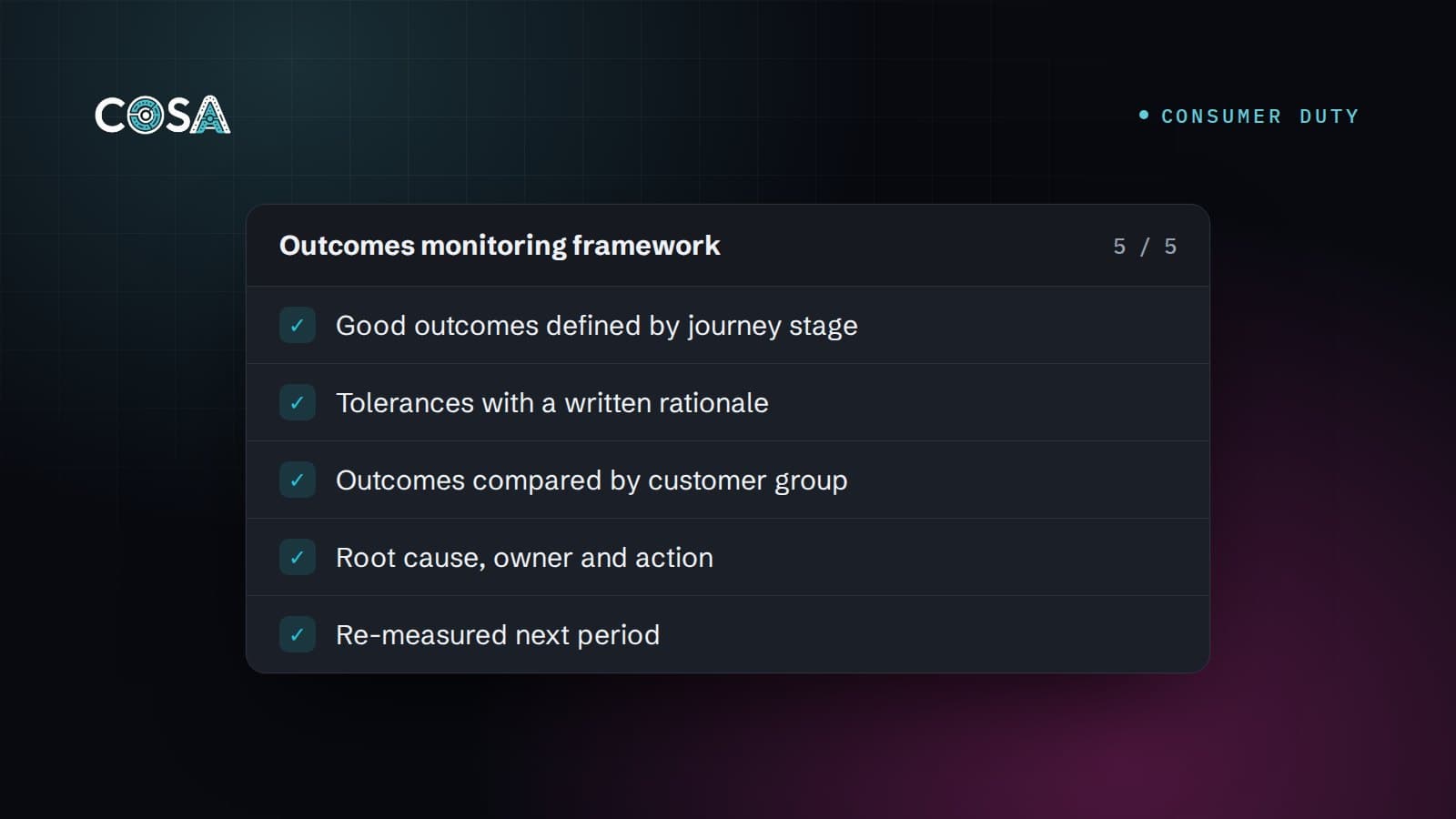
- Track each action to completion, and check it worked. In its July 2026 outcomes monitoring review, the FCA said firms should be able to explain what their information tells them, how they use it to identify risks or issues, what action they take, and whether that action improved outcomes. Re-measure the same point after the fix: the FCA's complaints and root cause analysis page suggests that a firm that changes a customer communication could listen to relevant calls or review a small sample of later customer interactions.
A simple way to classify root causes
| Cause | What you might see on the calls | Typical action |
|---|---|---|
| Script or wording | The same point missed or unclear across several advisers | Rewrite the script and test it |
| Training or knowledge | Errors concentrated among newer advisers or on one topic | Targeted training and coaching |
| Process | A step skipped or taken out of order, such as a document not sent | Change the process or add a check |
| Product information | Customers misunderstand the same feature even when it is explained | Revisit the explanation and check understanding |
| Vulnerability not identified | Signs on the call that were not picked up or acted on | Review how signs are identified and handled |
| Individual practice | One adviser, consistently | Supervision, coaching and file review |
Using call recordings to find the root cause
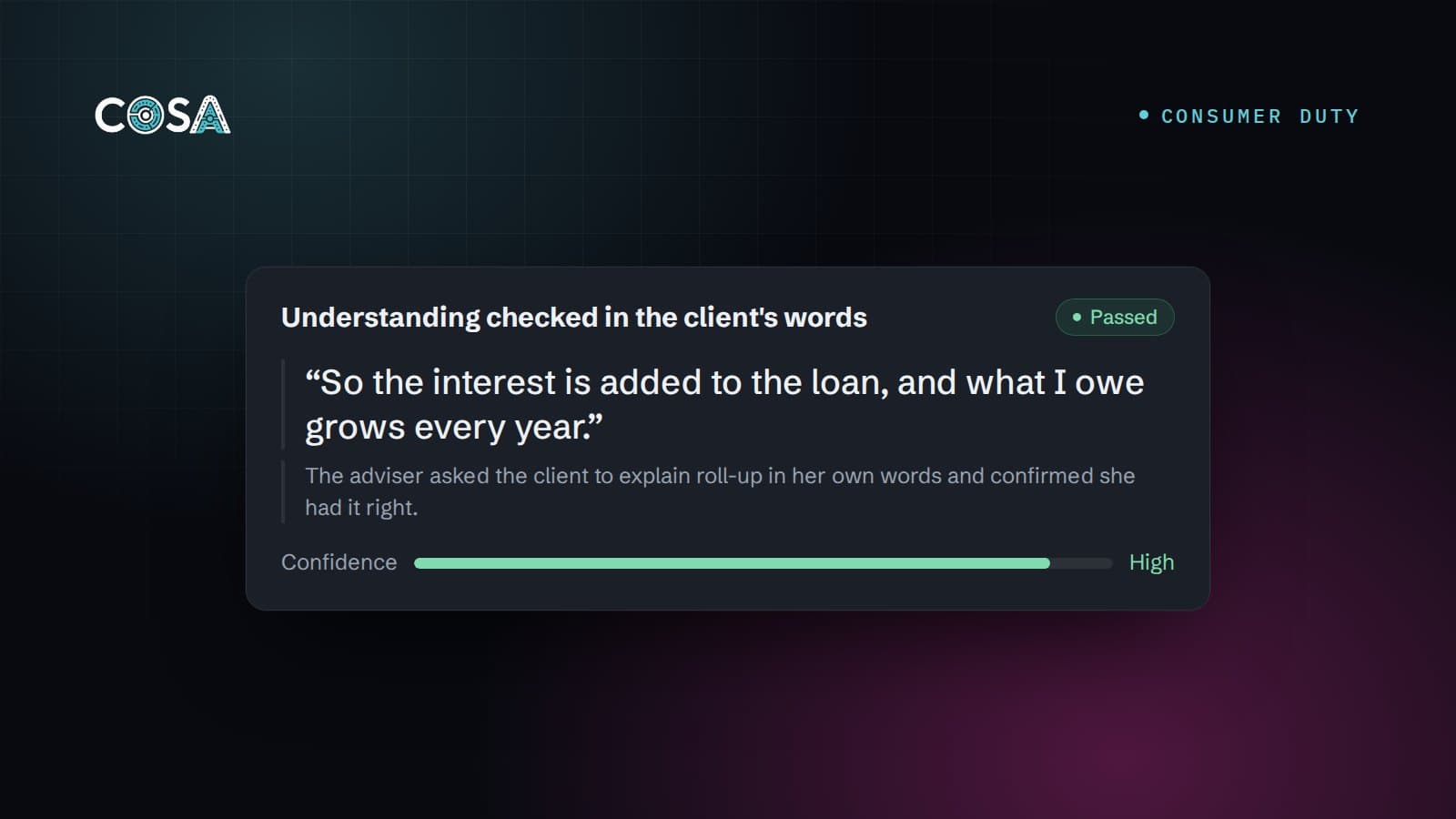
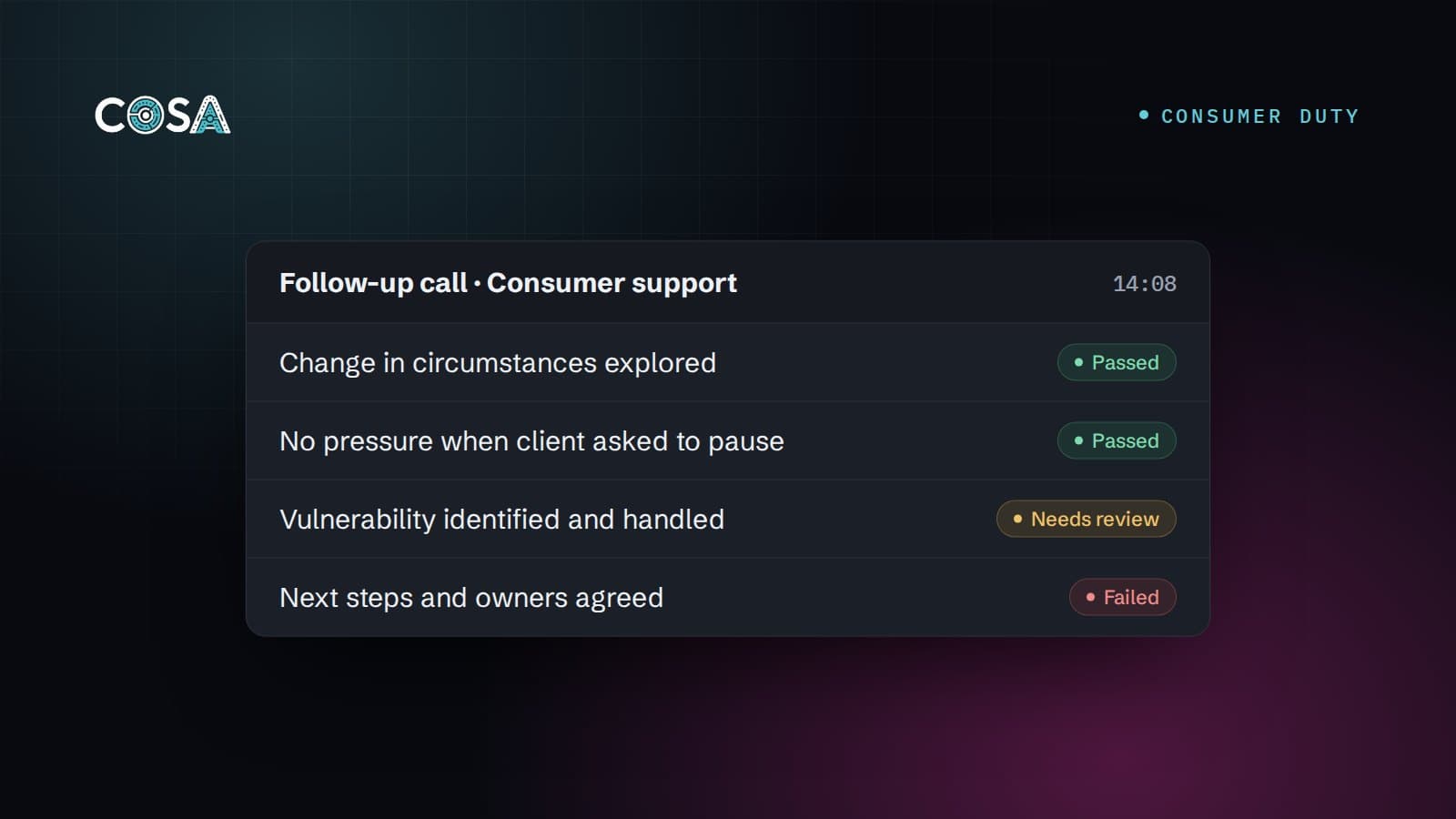
For a telephone-based advice firm, the calls before a complaint usually hold the answer: what the customer was told, what they asked, whether they could explain it back, and whether signs of vulnerability came up. File notes record what the adviser meant to cover; the recording shows what was actually said.
The FCA's complaints and root cause analysis good practice page suggests ways smaller firms can check whether issues are being missed: listen to a sample of customer calls, review a small number of completed customer journeys, or ask customer-facing staff to discuss recent cases where customers seemed confused, dissatisfied, vulnerable or at risk of harm. These are suggestions, not requirements, but they point the same way: look at what actually happened, not only at what customers complained about.
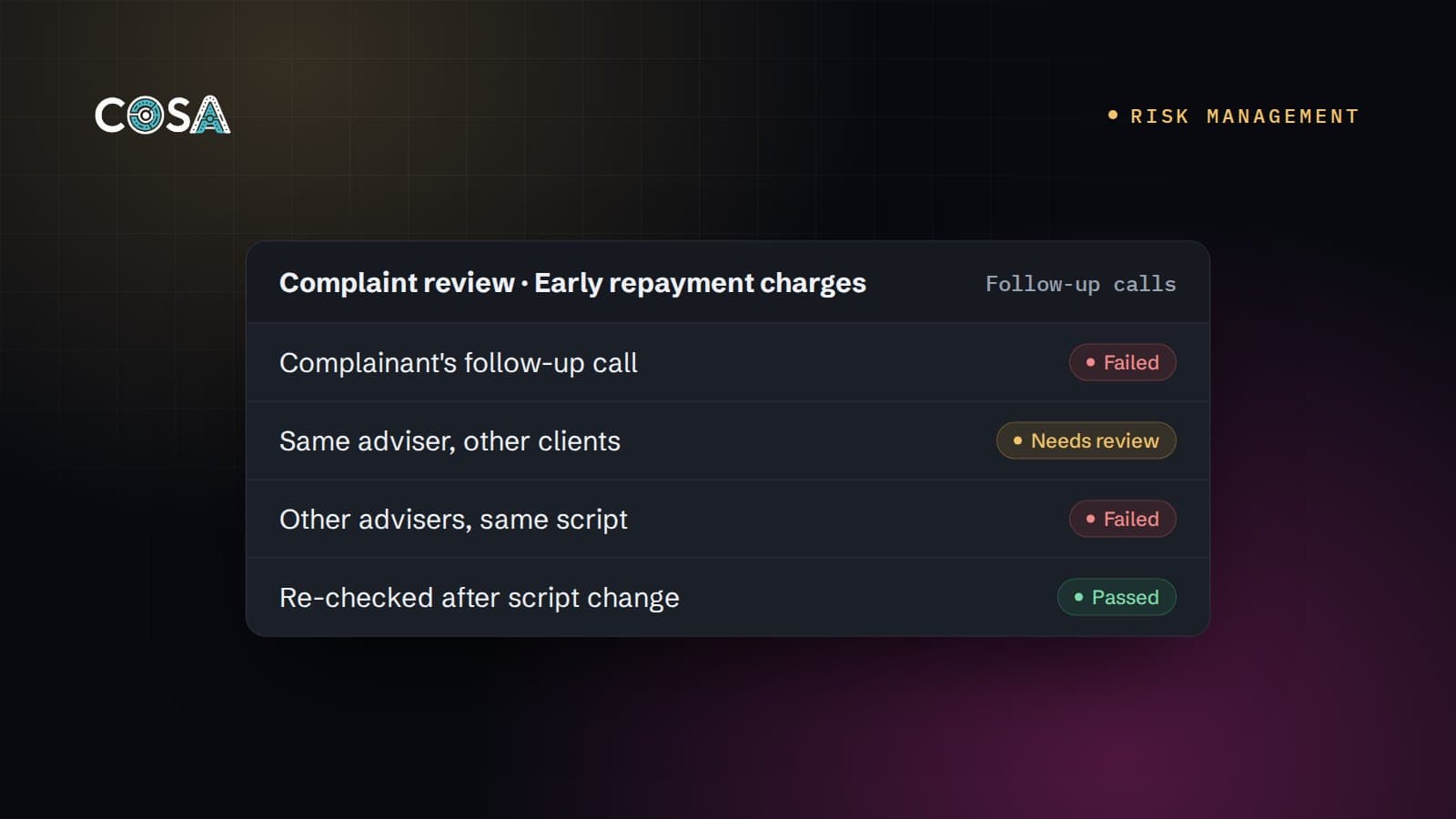
- Go from one complaint to a pattern. Once you know the immediate cause, check the same point on other advisers' and other customers' calls. A small sample has limits here: a failure that affects one call in fifty is missed entirely by a random sample of 25 calls about six times in ten. Our guide to call QA sampling and the call QA sample size calculator show how many calls you would need.
- Search by meaning, then listen. "The charge for paying it back early" and "early repayment charge" are the same topic, so search transcripts by meaning as well as keyword. Then listen to the moment: transcripts can mishear figures and lose hesitation or confusion. See how cited AI answers about calls work.
- Compare customer groups. If the failure is more common on calls with customers who show characteristics of vulnerability, that is a difference PRIN 2A.9 expects firms to identify and act on.
Which calls a firm must record is a separate question, covered in our guide to FCA call recording rules.
Evidencing root cause analysis: records, MI and the board
Root cause work that is not written down is hard to show to a board or the FCA. A simple record for each issue might hold:
| Field | What to record |
|---|---|
| Issue | Complaint references and a one-line description |
| Evidence | Calls reviewed (with date and time), documents and file notes |
| Causes | The immediate cause, the root cause, and how you know |
| Scope | Who else was affected, and how you checked |
| Customer groups | Whether customers with characteristics of vulnerability fared differently |
| Actions | What will change, the owner and due date, and whether redress was considered |
| Result | What re-measurement showed after the fix |
Keep an audit trail of who reviewed what and when. The FCA's outcomes monitoring review shows where the record goes next. In one good-practice example, firms that found poor outcomes, including unsuitable advice, analysed the root causes and fed them into governance reporting, committees, process changes, training and frontline activity. "They then tracked their remedies through to completion." In the same review, firms used QA reviews, complaints analysis and service-level MI, including "QA breach categories and QA scoring approaches that highlighted incorrect customer outcomes, providing a clear trigger for further review and action." Call QA results and complaints belong in the same picture: a QA breach can be the complaint you have not received yet. Our call QA scorecard template shows one way to categorise fails.
The same review is blunt: "Collecting data, listing metrics or reporting management information (MI) will not, by itself, show whether customers are receiving good outcomes." Present root causes to the board as causes, actions and results, not as complaint counts. For smaller firms, the FCA's board reports review also points to external sources, including the Financial Ombudsman Service and trade body insight, as useful context. Our guides to Consumer Duty board reports and compliance MI your board will read cover the reporting side, and SM&CR reasonable steps covers how senior managers evidence oversight.
COSA supports the call side of this work. When a complaint arrives, a downloadable Client Pack gathers the client's reports, transcripts and summaries, and the COSA Assistant answers questions about their calls with cited passages and plays the recording from the cited moment. With every in-scope call assessed against the firm's own rules and quoted evidence behind each verdict, the most-failed rules and results by adviser and call type help show whether a failure recurs, and whether it stops after a fix. Finding the root cause and handling the complaint stay with the firm: COSA supports, and does not replace, professional compliance review. See how COSA supports the Consumer Duty.
This article is general information, not legal or regulatory advice. It reflects the FCA Handbook and FCA publications as at 13 October 2026. Refer to DISP 1, PRIN 2A and FG26/2 for the requirements and guidance that apply to your firm. Examples are illustrative.